Number and Letter Tracing for Preschoolers: How to Start at Home
October 29, 2026 · 6 min read
To start tracing worksheets for preschoolers, begin with big, simple lines and shapes, then move to numbers and letters once your child can follow a dotted line with a crayon. Keep each session to about five to ten minutes, and let your child set the pace.
Tracing is not about perfect handwriting at age 3 or 4. It is practice in holding a crayon, following a path, and starting and stopping on purpose. Those small skills make writing easier later. Kids develop at different speeds, so treat the ages below as rough guides.
Step 1: Warm up with lines, not letters
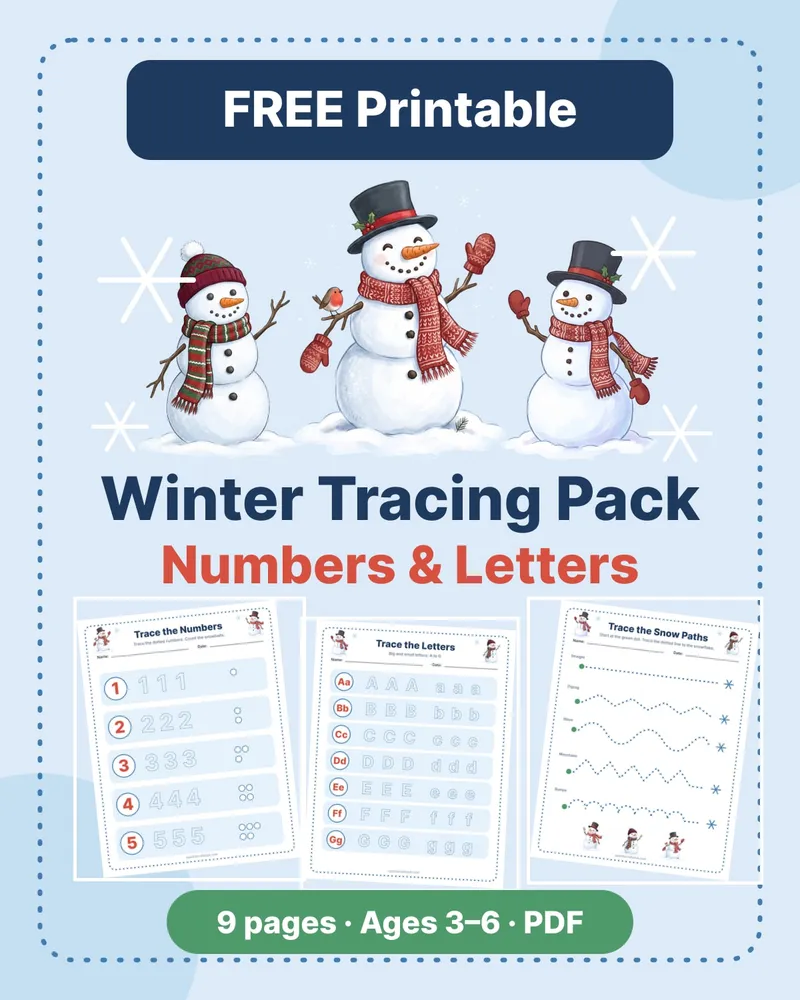
Straight lines, zigzags, waves, and bumps are the building blocks of many letters and numbers. A page like Trace the Snow Paths in the Winter Tracing Pack lets kids follow a dotted path from a green dot to a snowflake. That gives them a clear start, a clear finish, and a small win.
 Tracing & Coloring
Winter Tracing Pack: Numbers & Letters
9 Pages
Winter tracing worksheets for ages 3 to 6: dotted numbers 1 to 10, letters A to Z, snow path lines, and a name page.
 Tracing & Coloring
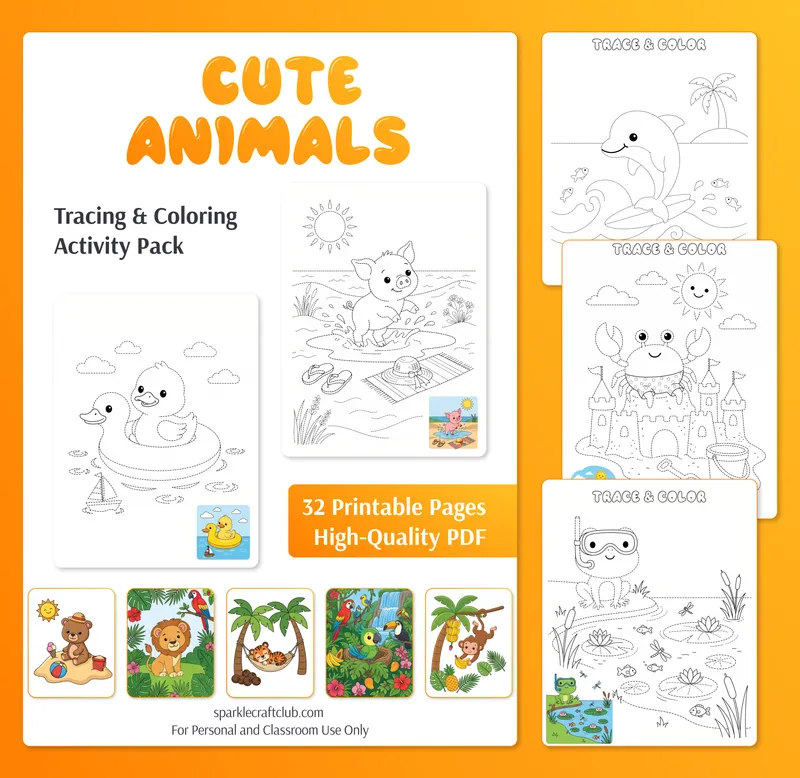
Cute Animals Tracing & Coloring Activity Pack
32 Pages
Help young learners build essential pre-writing skills while having a blast with adorable baby animals!
Step 2: Practice big before small
Before a pencil touches paper, let your child make the shape with their whole arm.
- Sky writing. Draw the number or letter in the air with a big arm movement.
- Finger tracing. Trace the dotted shape on the page with a pointer finger.
- Tabletop writing. Draw it in a tray of salt or sand, or on a steamy window.
- Crayon, then pencil. Chunky crayons are easier to hold. Move to a pencil when your child is ready.
Step 3: Start with numbers 1 to 5, then add letters
Numbers are a friendly place to start because many are simple shapes and counting makes them meaningful. A page that pairs each number with objects to count, like snowballs, connects the symbol to the quantity. After numbers 1 to 5 feel comfortable, move on to 6 to 10.
For letters, many teachers start with the letters in a child's own name, since those carry meaning. Use the name page to practice, and add other letters at your child's pace rather than strictly A to Z.
A simple 10-minute routine
- Minute 1 to 2: Say the number or letter and its sound or name together.
- Minute 3 to 4: Sky writing and finger tracing.
- Minute 5 to 8: Trace one row on the page with a crayon.
- Minute 9 to 10: Free choice: draw, color, or count objects that match the number.
Make it a game
- Hide small objects in a bowl and count out the number your child just traced.
- Trace a letter, then find three things in the room that start with it.
- Use stickers or a small star after each finished row.
- Let your child be the teacher and show you how to trace a number.
When to slow down
If your child is tired, gripping the crayon very tightly, or avoiding the page, take a break and go back to lines, drawing, or playdough. Pressure usually makes it harder. If you are concerned about your child's fine-motor development, talk with their pediatrician or teacher.
Frequently Asked Questions
- At what age should kids start tracing?
- Many kids enjoy simple line tracing around age 3 and can try numbers and letters around ages 4 to 5, but every child is different. Follow your child's interest instead of a fixed age.
- Should I teach uppercase or lowercase letters first?
- Many teachers begin with uppercase because the shapes are simpler, and some schools start with the letters in a child's name. Ask your child's teacher what they use so home practice matches school.
- How long should a tracing session last?
- Five to ten minutes is plenty for preschoolers. Short, happy sessions work better than long ones that end in frustration.
- Do I need special pencils or paper?
- No. Regular copy paper and chunky crayons are fine. Switch to a pencil when your child is ready.
More free pages are in our tracing and coloring worksheets and preschool activity sheets.