Printable Mazes for Kids: How to Use Them at Home and in the Classroom
October 22, 2026 · 6 min read
Printable mazes for kids are one of the simplest activities to keep in a drawer. They need nothing but a pencil, they fit in a backpack, and kids from about age 4 can usually find a version that feels like the right level of challenge.
This guide covers how to pick a maze for your child's age, how to help without taking over, and a few ways to turn a plain maze into a game. It also explains what mazes practice, in plain terms, without big promises.
What kids practice with a maze
A maze looks like a puzzle, but it also asks a child to use a pencil in a controlled way. Kids need to stay between lines, change direction, and plan a path with their eyes. Those are the same small movements and habits they use when they start to write letters and numbers. Mazes are not a replacement for writing practice, but they are a friendly warm-up for it, and many kids find them more fun than tracing.
- Pencil control: staying inside a path means slowing down and steering.
- Visual planning: looking ahead to avoid a dead end.
- Persistence: a wrong turn is part of the game, so kids practice trying again.
- Focus: a short, finishable task is a good way to settle into quiet time.
Choosing a maze by age
- Ages 3 to 4: very wide paths and a short route. Kids at this age often do better with a finger or a chunky crayon. Straight-line and wave tracing pages are a good lead-in.
- Ages 4 to 5: a small grid with a few turns and a clear start and finish, like a turkey looking for a pie.
- Ages 6 to 8: bigger grids with more dead ends. Many kids in this range like to try the harder maze after they have solved an easy one.
Our Thanksgiving Word Search & Maze Activity Pack includes both an easy maze and a larger harvest maze, so siblings of different ages can each have their own page. It also has a "Trace the Leaf Paths" page for the youngest kids.
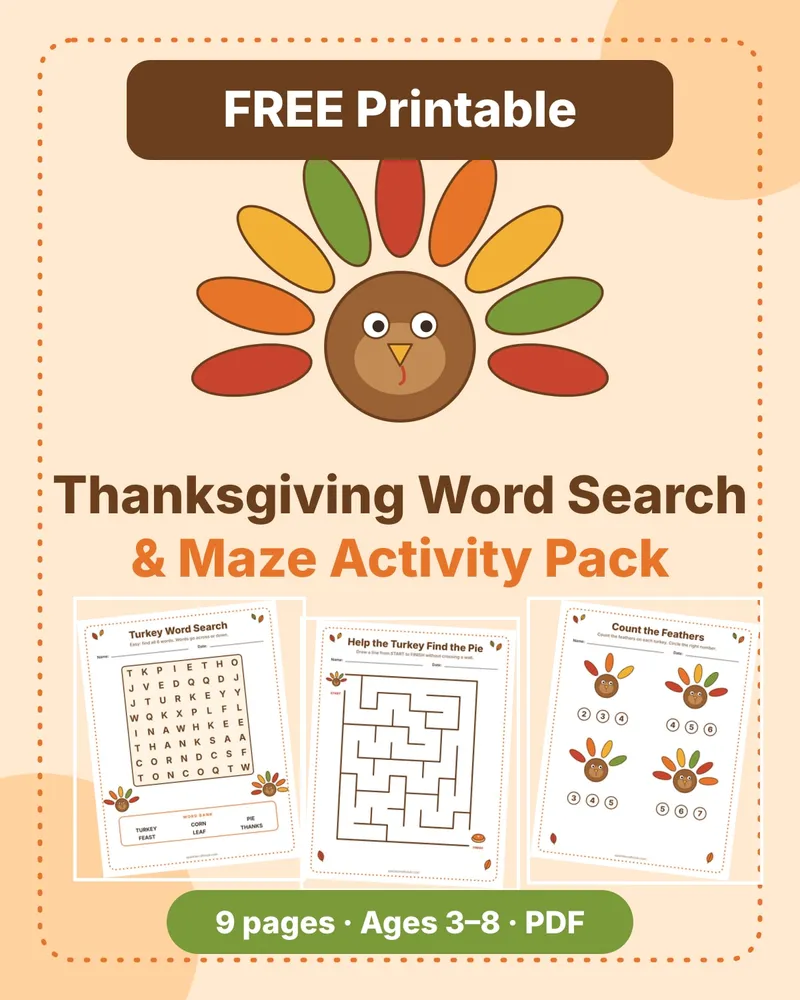 Preschool Activity Sheets
Thanksgiving Word Search & Maze Activity Pack
9 Pages
Printable Thanksgiving word searches, mazes, counting, and pencil-control pages for kids ages 3 to 8.
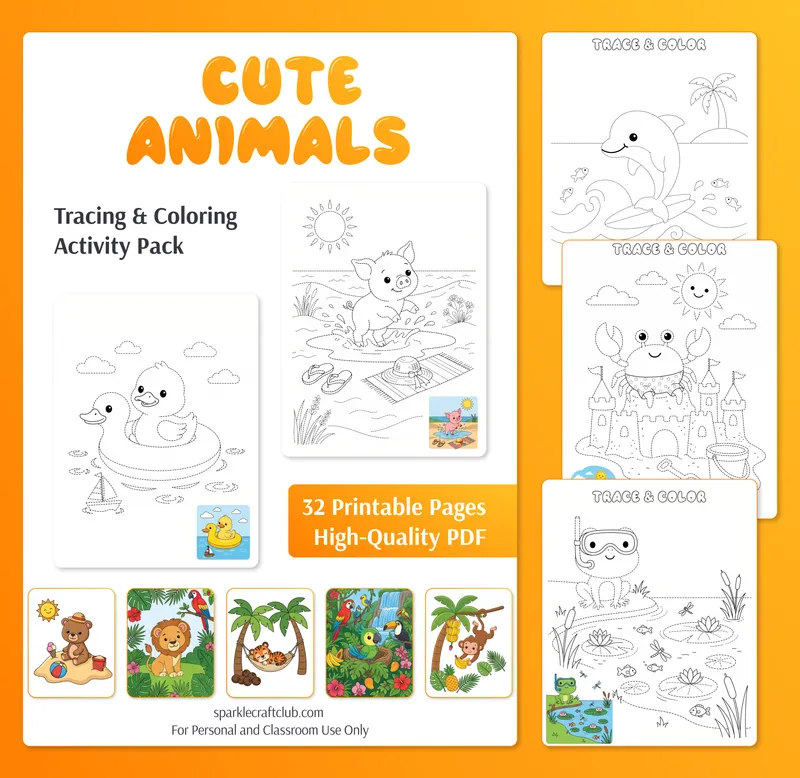 Tracing & Coloring
Cute Animals Tracing & Coloring Activity Pack
32 Pages
Help young learners build essential pre-writing skills while having a blast with adorable baby animals!
How to help without solving it for them
It is tempting to point to the right turn, but most kids enjoy the puzzle more when they find it on their own. A few phrases that help without giving away the answer:
- "Which way looks open?"
- "Do you want to try that path with your finger first?"
- "What could you do if this path ends?"
- "Try starting from the finish and working backward."
Working backward from the finish is a classic trick, and kids are usually delighted when they learn it. Talk about it as a "secret" the first time.
Five ways to turn a maze into a game
- Two colors. Two kids start at opposite ends and use different colors. They see where their paths cross.
- Beat the sand timer. Use a one-minute or two-minute sand timer with an easy maze. Keep it friendly and let kids choose whether they want it.
- Add a story. The turkey is hungry. The little dinosaur is looking for its egg. Kids put more effort into a path when there is a reason to get to the end.
- Draw your own. After solving a few, kids can draw a simple maze for a sibling or parent to solve.
- Maze plus coloring. Color the characters at the start and finish before or after solving. For dinosaur fans, the Kawaii Dinosaur Coloring Pack pairs well with a "dinosaur finds its egg" story.
Maze activities for early finishers and centers
In a classroom, a folder of mazes at different levels is an easy early-finisher option. Teachers can print a few levels, label the folders by color, and let students pick the next one when they are ready. Because the answer is visible (the path either gets there or it does not), students can check their own work, which means less waiting for the teacher.
For a literacy center, pair a maze with a word search so students practice both visual tracking and reading. For a fine-motor center, combine mazes with cut-and-paste pages such as Jungle Animals: Match & Paste.
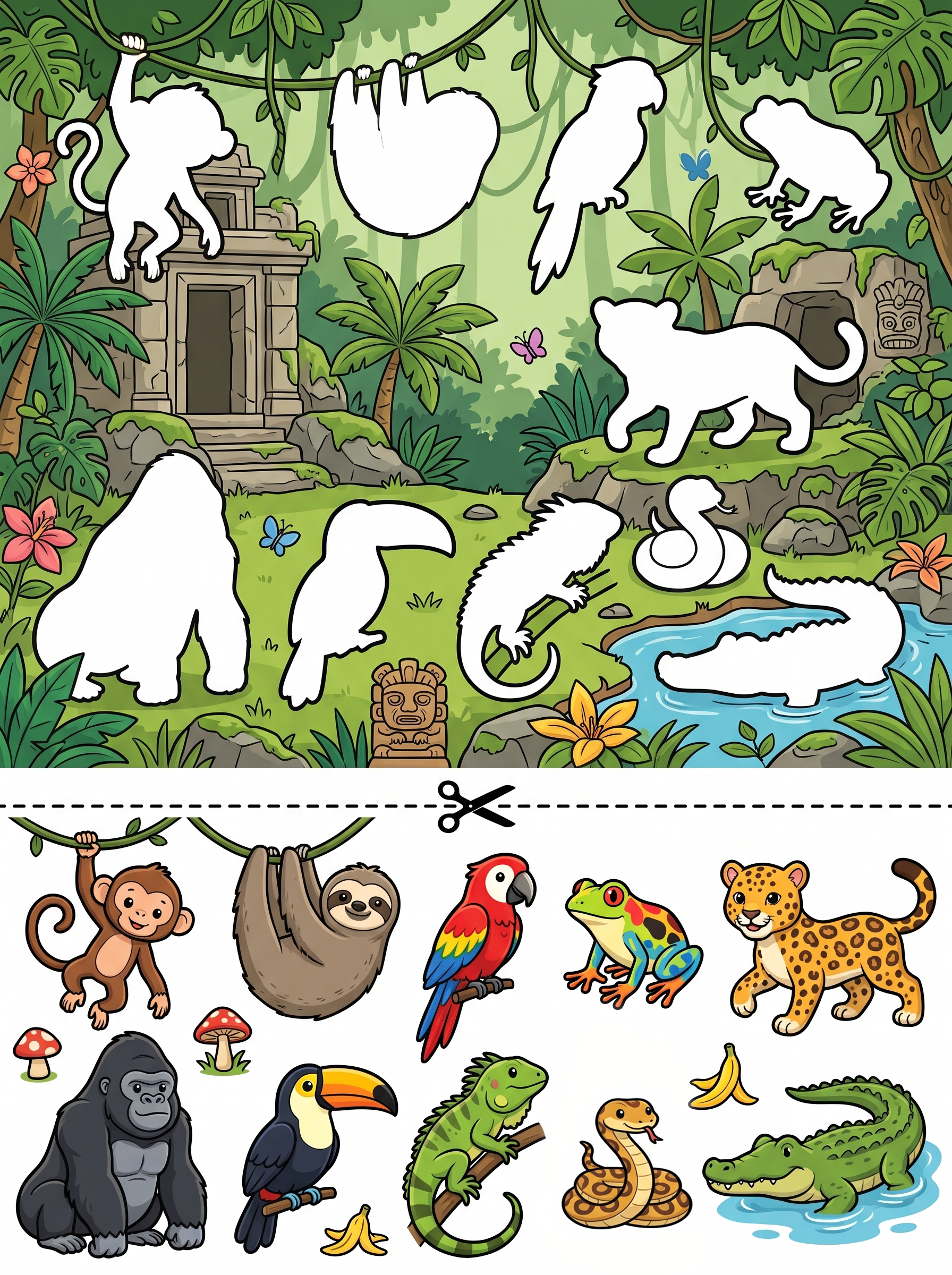 Preschool Activity Sheets
Jungle Animals: Match & Paste Activity Sheet
1 Page
Fun cut-and-paste matching activity for toddlers & preschoolers to train visual recognition and fine motor skills.
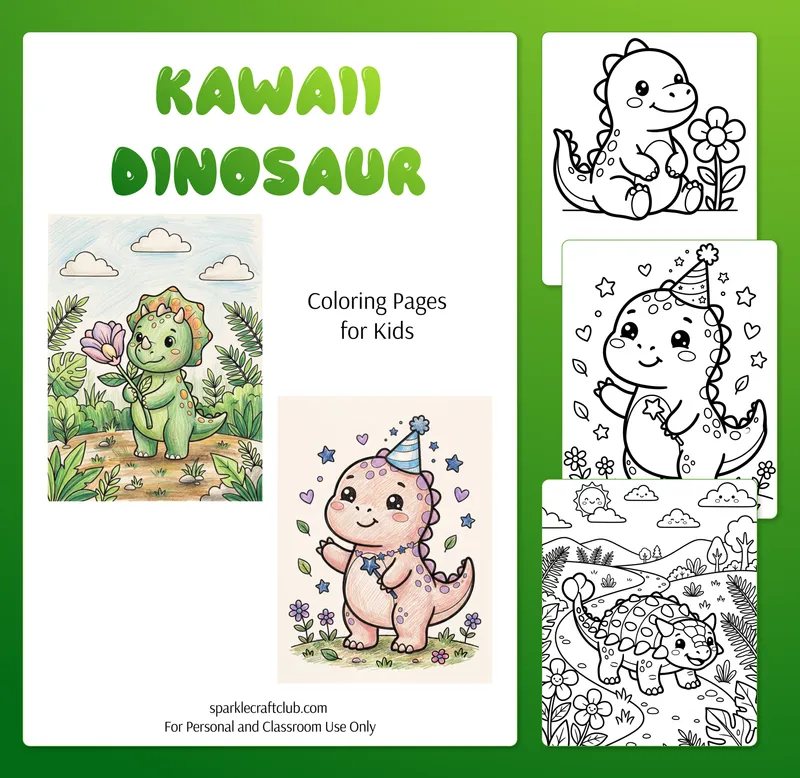 Coloring
Kawaii Dinosaur Coloring Pack
15 Pages
Fifteen friendly kawaii dinosaurs to color: T-Rex, Triceratops, Stegosaurus, and more.
Printing tips
- Print on US Letter paper at 100% scale. If a page looks small, check that "fit to page" is off.
- Use a pencil for the first try so wrong turns can be erased. A marker is fun for the second round.
- Put a few pages in a clear sleeve and let kids use a dry-erase marker to try again and again.
- Print the sample page first to test the settings.
When a maze feels too hard
If your child gets frustrated, that is useful information, not a failure. Switch to a simpler page, like a straight-line or wave tracing sheet, and come back to the maze in a few weeks. Short sessions of five to ten minutes are usually better than one long one. Stop while it is still fun.
Frequently Asked Questions
- What age can kids start doing mazes?
- Many kids can try very simple mazes with wide paths and a short route around age 3, often with a finger or a chunky crayon first. Bigger mazes with more turns and dead ends suit kids about 6 to 8.
- What skills do mazes help kids practice?
- Mazes practice pencil control, visual planning, persistence, and focus: the same small movements and habits kids use when they start to write.
- What if a maze is too hard for my child?
- Switch to a simpler page, like a straight-line or wave tracing sheet, and come back to the maze in a few weeks. Short sessions of five to ten minutes usually work better than one long one.
For more screen-free ideas, browse our free printable activity sheets for kids, including tracing and coloring worksheets and preschool activity sheets.